Wednesday, 12 November 2014

Philonotis arnellii

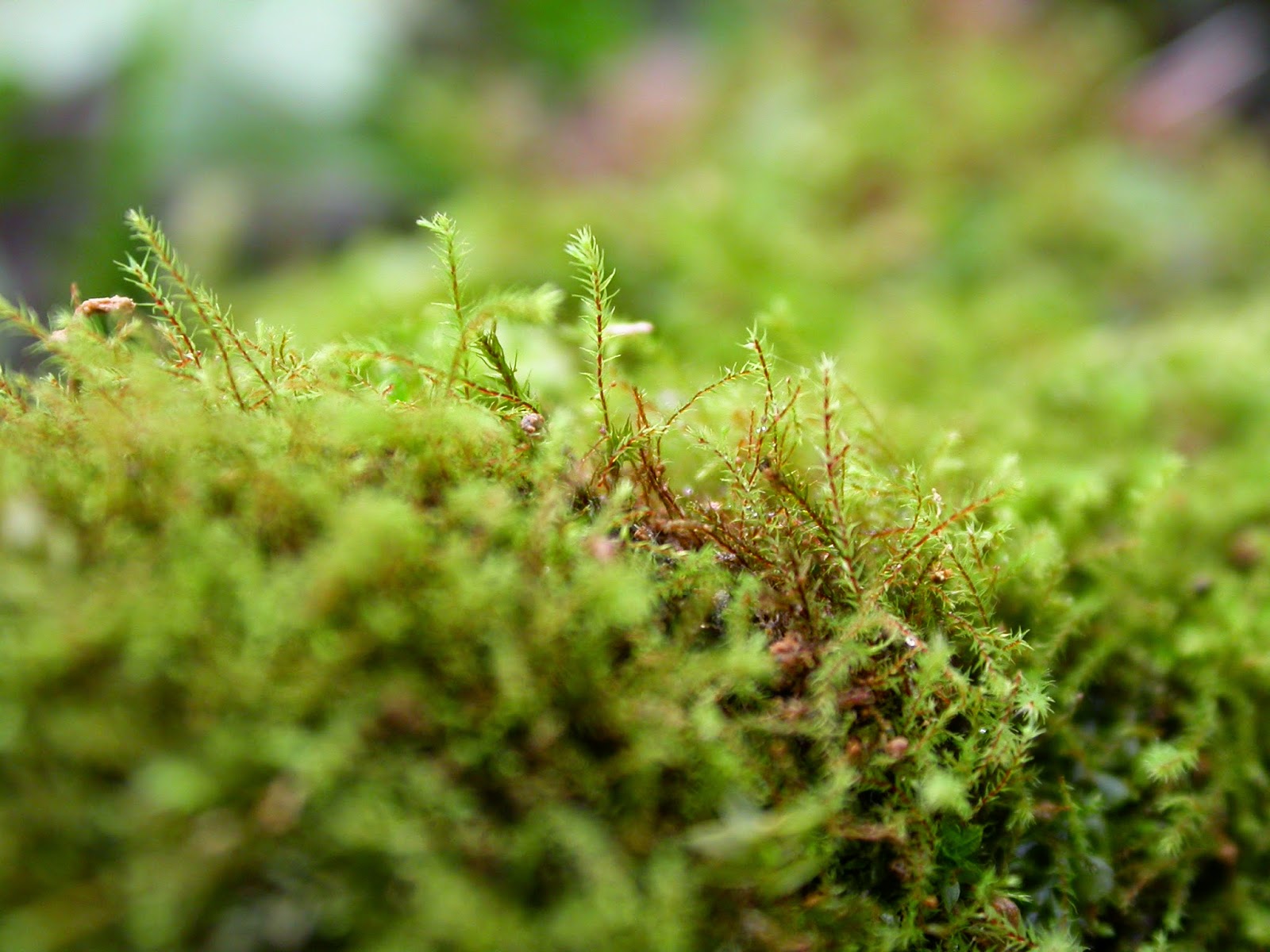
The books make out that Philonotis arnellii is a featureless moss that is easily confused with the very much commoner P. fontana.  That is true to an extent, but it's one of those species that is really quite distinctive when you see the real thing: when you think you've found it, you've got P. fontana and it's only real P. arnellii when you know you've got something different.  Most colonies I have found are on earthy ledges alongside rivers, perhaps flooded once every few years, but I've also seen it in the uplands on ledges and occasionally on flushed lane banks (perhaps like Barry's recent one).  I haven't found convincing material on forestry tracks, where juvenile P. fontana is frequent and confusing. 

Look for relatively dense patches of consistently very small shoots with very narrow leaves, expect there to be abundant deciduous branchlets (there usually are) and look for fertile buds (with even longer, narrower leaves) with a lens.  A microscope is needed to check the cell mamillae: look at mature leaves on the lower, brown sections of the stem.  Here are four photos from a large colony near Brechfa in central Carms.


SN60I Cwmcerdinen verges

It surprises me sometimes how many species you can find in the most unlikely looking spots. Yesterday I stopped at the cattle grid at the entrance to the village as there was a bit of tarmac and flushed gravel to look at before I headed on to my target of the riparian woodland. In the end I spent nearly an hour in this area where I found a base-rich seepage dominated by Pellia endiviifolia and Dicranella varia as well as a section of verge with species such as Solenostoma gracillimum under a mat of Wahlenbergia hederacea. Plus there was some nice wet heath adjacent to the road with all the commoner Sphagnum spp., etc. On a few occasions recently I've found non-fruiting Fossombronia, which is very frustrating! Hoping to take Alfie for a ‘walk’ in the next tetrad today...
SN63660603 Wahlenbergia verge with 'understory' of
Solenostoma gracillimum

SN63680615 cattle grid seepage with abundant
Pellia endiviifolia and Dicranella varia 

Tuesday, 11 November 2014

Caerphilly Castle

I've had hardly any time for bryophyte recording over the last week, but a family outing to Caerphilly Castle on Sunday provided a brief opportunity to record a few species. Looking at the official and unofficial county databases before leaving home, I was amazed to see there were no records at all from the castle (even at hectad level) - and so got a little bit excited at the prospect of interesting finds.

In the event I didn't find anything unusual, with 20 species recorded in total of which 12 were on the castle walls themselves. The best of these was probably Tortella nitida, which was quite frequent, though there is at least one other record of this species for ST18.

In hindsight, I suppose the lack of interest isn't too surprising given the castle underwent a major restoration between the 1930s and 1960s. I didn't check the outside of the walls though, so there's still the potential for something interesting there...

Sunday, 9 November 2014

mystery moss in Glynneath!

Re: moss erroneously identified as Dicranum fuscescens in earlier post (doh!)

I don't think it's an aberrant from of Campylopus flexuosus. Although some of the the sporophytes on plants in situ are Campylopus-like and there is a tomentum, the leaves don't have the conspicuous differentiated alar cells of that species or the typical leaf cell structure. In fact, the cell structure suggests a Dicranella to me.


It looks like Dicranella heteromalla. I'll edit the earlier post so that the error isn't propagated into cyberspace.

Saturday, 8 November 2014

mystery moss in Plantasia

I'm assuming this is an alien, but must confess that I've not yet tried keying it out, so forgive me if it's something obvious that I'm missing. It's reminiscent of Calyptrochaeta apiculata, but clearly isn't that. C. brownii looks a better fit but that's not quite right either so I'm throwing it open to suggestions before I spend more time looking. Here are some phone pics from the location and bits under the m'scope. I'll take a few tidier images tomorrow.
 

Monday, 3 November 2014

Metal toxic Swansea

Here are a couple of photos from the Pluck Lake/Six Pits branch area of Llansamlet, taken during a survey in 2007.  Brachythecium velutinum on the metal-rich spoil is extremely falcate and well-marked; Scopelophila cataractae is more subtle, but distinctively tongue-shaped; the area also supported a peculiar bulbiliferous Pohlia that keys as P annotina but is too shiny (suggesting P proligera).  It would be good to go back some time to see how these species are doing, because 99% of the metal spoil heaps in Swansea have been reclaimed. 


Sunday, 2 November 2014

Glamorgan's smallest tetrad? (and Tortula query)

Yes, I know all tetrads are the same size, but in terms of land area ST16C must be one of, if not the, smallest in the county. It contains the very tip of Friars Point at Barry Island -  probably no more than 300 square metres of dry land above the inter-tidal.

I was down on the beach at Barry Island with the family yesterday so decided to take a quick look, given the lack of any previous records. Irritatingly I'd forgotten my phone/GPS so wasn't sure exactly where this tetrad started, and so took a cautious approach and only looked for bryos right at the point. Looking at the map when I got home, there was a bit more land in ST16C than I realised - so I'll have to have another look next time I'm there.

The samples I grabbed comprised only two species, both from thin soil among the limestone rocks: Tortella flavovirens and a Tortula (I think) which has me puzzled. Photos below.


Initially I thought this was T. modica but the cells are at least moderately papillose, the margins aren't obviously recurved and the leaf tip is a bit toothed. The latter character made me think it might be Hennediella but I think the seta is too short (only about 4mm). It doesn't seem to fit any of the other Tortula species very well. Any suggestions?

Thanks
George