Showing posts with label Scapania. Show all posts

Sunday, 9 February 2020

A sweet surprise on the Sugar Loaf


St. Mary’s Vale on the southern flanks of the Sugar Loaf, just on the outskirts of Abergavenny, apparently supports a dry south-eastern example of a wet western oak woodland community, and a few areas do indeed have quite a western feel, with a bilberry ground layer and scattered hard-fern.  The ground layer doesn’t have the luxuriant moss layer seen in western versions of this woodland community, but if you search around you can find scattered patches of species like Rhytidiadelphus loreus, Dicranum majus, Pleurozium schreberi and Plagiothecium undulatum.    The locality also has a well-known population of Bazzania trilobata, which is confined to quite a small area on the north-east facing slope of the valley.    

During a visit to the site last week, I quickly paid my respects to the Bazzania and then wandered along the slope further up the valley, hoping to find that the Bazzania was more widespread than thought.   Eventually I came to a small area with a very steep bank above a hollow, which pleasingly had about 15 patches of Bazzania - a reasonable distance from the main population.   

     The shiny patches are Bazzania - flash reflecting off the broad round-backed stems.

In a nearby rocky area the ground was an almost continuous sheet of R. loreus and it was good to see that much of it was fruiting.


On a couple of rotting logs were a few patches of Nowellia curvifolia, which I don’t see a lot of in this part of Wales.  Every time I see this species I am reminded of the town of Todmorden, where I spent many teenage days fishing the canal and where one of my working class heroes, John Nowell, was born, after whom the liverwort genus Nowellia is named.  Nowell was an illegitimate and impoverished handloom weaver, who somehow in his few hours of free time became a skilled bryologist, regularly corresponding with giants of botany like William Hooker, Wilhelm Schimper and William Wilson.  If anyone is interested in finding out more about Nowell, Mark Lawley wrote a brief biography about him, which is available on the BBS web site https://rbg-web2.rbge.org.uk/bbs/activities/field%20bryology/FB108/BBS%20FB108%20Bygone%20Bryologist.pdf
, but a more detailed account was published in the BBS Bulletin some years earlier - Foster, W.D. (1980). Famous Bryologists. 1. John Nowell of Todmorden (1802–1867). Bulletin of the British Bryological Society 35, 13–20. 


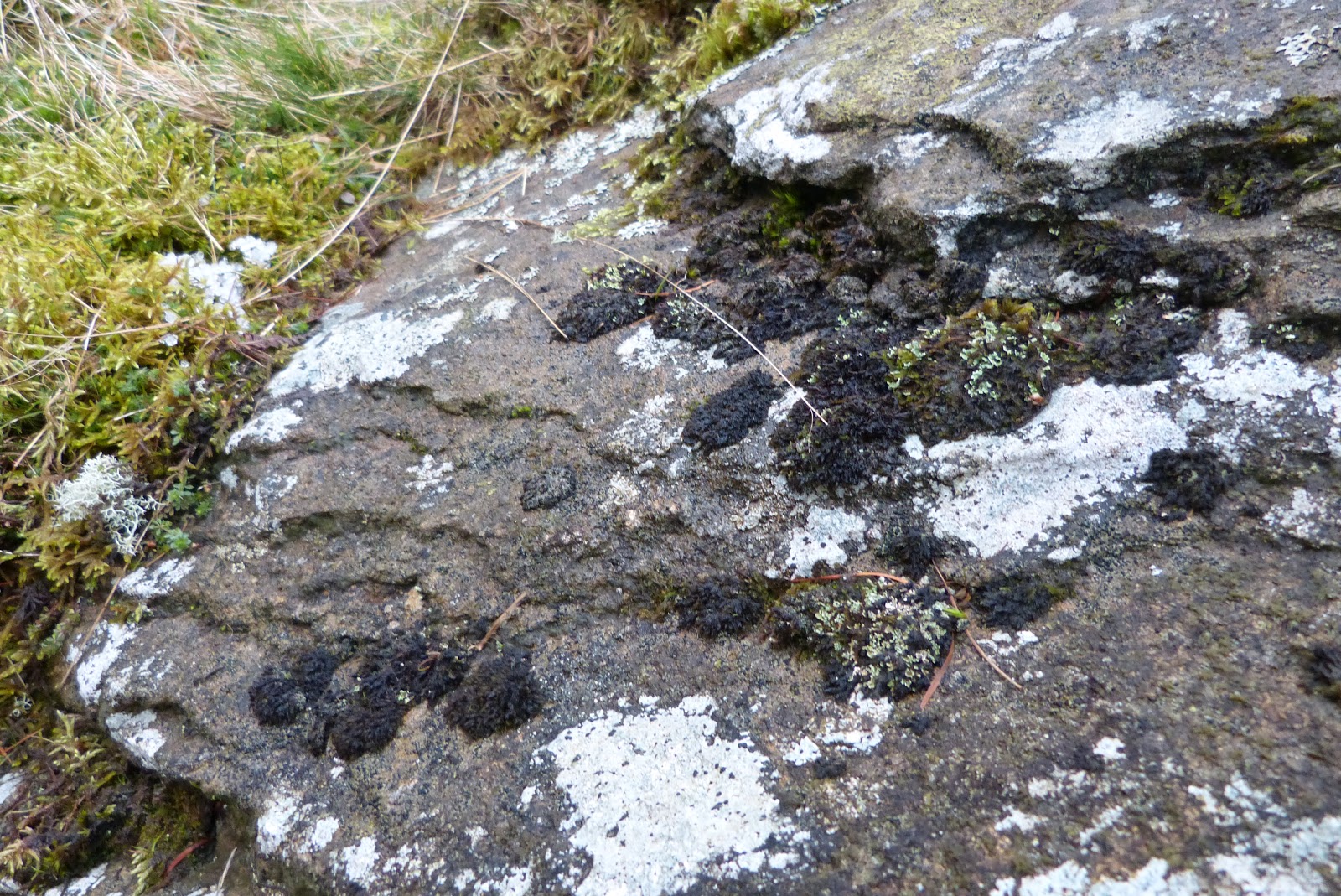
On my way back to the car I walked past a couple of small stones poking out of the soil, which had patches of a tiny pale-looking liverwort, which I assumed was young Diplophyllum albicans, but then I noticed some red gemmae and thoughts turned to a Tritomaria; however, the lens revealed a tiny spiky Scapania, presumably umbrosa – a check of the gemmae under the microscope showed they were mostly twin-celled and thin-walled.   Sam tells me it is new to Monmouthshire.


I didn’t see much else of any great interest, apart from a patch of Cololejeunea minutissima on a riverside tree, which I don’t think I have seen in this valley before, and some gorgeous coral slime mould.        


Friday, 25 January 2019

Scapania paludicola and Matt's other finds

Matt Sutton has been busy in Pembrokeshire, looking for species that I missed whilst recording for The Mosses and Liverworts of Pembrokeshire.  He has made numerous new hectad records over the last couple of years, and found Ditrichum lineare new to the county in 2017.  Last year he made two additions - Bryum moravicum near Kilgetty and Scapania paludicola near Llangolman - as well as finding notably disjunct rarities such as Porella obtusata on the south coast near Saundersfoot and Cephaloziella turneri in a gully on the north coast near Strumble Head.  Although VC45 is probably the most intensely recorded county in Wales for bryophytes, diligent searching is bound to turn up new things.


Matt's Scapania paludicola is particularly welcome because it helps with a longstanding puzzle.  This species was thought to be very rare in Britain, but my CCW colleagues began finding it in pH-neutral mires across much of Wales and the Atlas suggests it is something of a Welsh speciality.  However, forms of Scapania irrigua mimic the leaf shape and arched keel of S. paludicola and I have long held a nagging doubt that the widespread Welsh plant might just be extreme S. irrigua.  This was not helped by the complete lack of gemmae on Welsh plants, unlike a couple I was sent from Scotland as Recorder for Hepatics.  Matt's find had dark gemmae, finally putting my mind at ease.  I am now confident that the Welsh mire Scapania really is S. paludicola.  Matt's plants were alongside typical neutral mire species: Sphagnum papillosum, Aulacomnium palustre and Straminergon stramineum.

Saturday, 7 April 2018

Tâf Fechan [SO01K square bash]

Left vc42, right vc41
As I was in Merthyr on Friday and I had a spare hour, I made a quick sojourn into SO01K, which was on a paltry 10 species. Even within my limited time slot I was able to quickly add an additional 64 species to the list for what is undoubtedly a much richer partial tetrad. There was also interest before reaching my target the square, when crossing Pontsarn viaduct I noticed a nice colony of Grimmia orbicularis on the Brecon side, new for vc42 according to the blog county lists.

Once in the square a large decorticated log was found to hold a good colony of Riccardia palmata (below; photo 1) and the limestone outcrops & boulders supported abundant drapes of Neckera crispa on dry cliffs with sheets of Conocephalum salebrosum in damper sections. The most interesting species of the drier sections were Loeskeobryum brevirostre (photo 2), Scapania aspera (photo 3) and Platydictya jungermannioides (photos 4-7), the latter new for Glamorgan with 3 small colonies noted in crevices, but with plenty of the same habitat, it seems likely there will be a strong population at this site.
 

Interest on the wetter sections was provided by Cololejeunea calcarea, Eucladium verticillatum, Leiocolea bantriensis (below; photo 1) and Seligeria acutifolia (photos 2 & 3). Well worth a revist - park on the vc42 side of the bridge, cross over and drop down from the Glamorgan side - very easy access.


Wednesday, 21 March 2018

Upper Melincwrt Valley

Upper Melincwrt Valley

The Lower Melincwrt Valley, near Resolven, is a well known and well visited site. It is very accessible, has an impressive, much photographed waterfall and a fairly large population of Hymenophyllum tunbrigense - on a vertical, north-facing sandstone outcrop near the river now difficult to reach and most easily viewed from the path with binoculars. However, the upper part of the valley, above the waterfall, is less well known and much of it is not very accessible, particularly when there is a lot of water running in the brook. H and I have tackled some of the easy parts but much remains unexplored as far as I am aware, particularly where it forms a deep gorge. It is so reminiscent of the Nedd Fechan, Pyrddin and Mellte Valleys, that it makes you think there must be good stuff lurking in there somewhere. Previous visits to the top of the valley, where there is another (small) waterfall, revealed a nice population of Trichocolea tomentella and riverside slabs covered in Nardia compressa.
Yesterday afternoon we tackled the accessible area shown above (vicinity of SN830015) where the rotten logs draped across the stream are plastered with Nowellia curvifolia and Scapania gracilis and some also have large amounts of Odontoschisma denudatum. The occurrence of Blepharostoma trichophyllum, frequent and overlooked though it may be, is also rather nice.


Log covered in Odontoschisma denudata Upper Melincwrt Valley

Odontoschisma denudatum, Upper Melincwrt Valley

Scapania gracilis interwoven with Blepharostoma trichophyllum, Upper Melincwrt Valley

Blepharostoma trichophyllum, Upper Melincwrt Valley

Tuesday, 13 March 2018

Out and about

I've had a lean winter recording-wise, but at least February proved to be reasonably productive. Most records were made around Cardiff, Bridgend and Merthyr Tydfil, during stop offs on the way home from work trips. Nothing remarkable has been recorded but minor highlights have included:

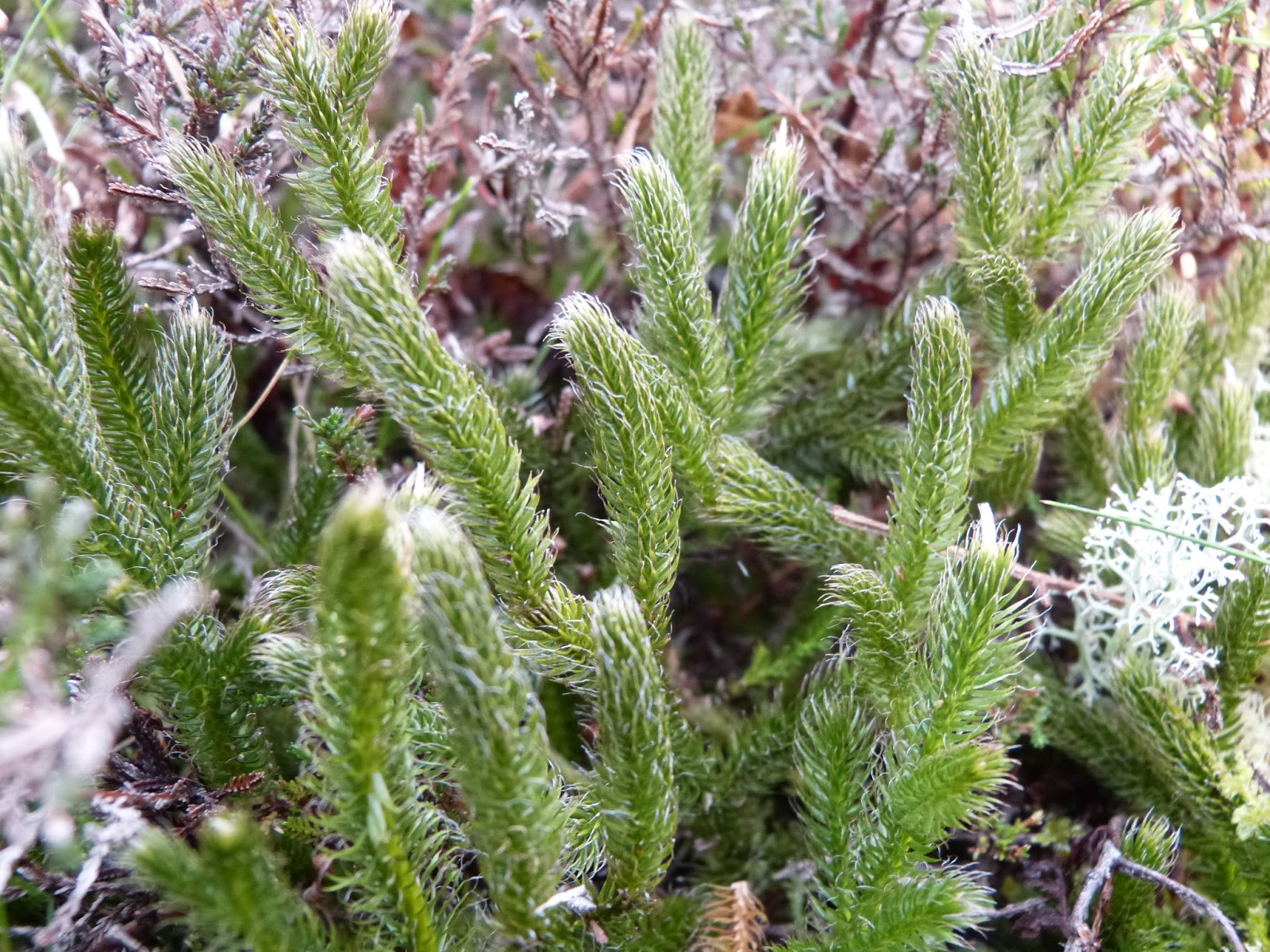
Lophozia bicrenata growing with Lycopodium clavatum among sparse Calluna heath on the former dry ski slope at Troedyrhiw (SO0703). I first saw the clubmoss here back in 2007 and it was pleasing to see it still thrives at the site.
 

Bryum violaceum on gravelly roadside soil, also at Troedyrhiw (SO0603); note smooth violet rhizoids and small tubers.


Scapania compacta and Andreaea rothii ssp. falcata on sandstone quarry waste at Merthyr Vale (ST0899).


In Cardiff and Bridgend I've not seen anything noteworthy, though it has been good to confirm Ulota crispa s.s. from several localities (I've been unable to find either U. intermedia or U. crispula to date, despite microscope checking of quite a few samples).

I'll aim to prepare an updated tetrad map in the next couple of weeks, which should show at least a few recording gaps being filled.

Monday, 1 January 2018

A frosty day at Llantrisant Common

On 28th December I spent a sunny day recording bryophytes on Llantrisant Common with Karen Wilkinson and Caroline O'Rourke.
Although the weather was beautiful the ground frost never cleared - Karen was reduced to ripping up chunks of frozen Sphagnum to take home to identify. We probably missed some smaller species as a result - there was no chance of picking through Sphagnum in the field to look for small liverworts, for example.

We covered the western bits of the common and succeeded in upping tetrad ST08M from 46 to 75 taxa. The existing site list was largely made up of records from CCW vegetation surveys in the 90s, topped up with a few grots I recorded in 2015. There were no epiphytes on the list however, and these made up the bulk of the additions. We'd hoped to re-find Scapania paludicola, recorded in several places by CCW, and got excited by some promising Scapania in M15 wet heath, but this proved on closer inspection to be S. irrigua.
The highlight of the day was a small patch of Atrichum crispum close to a stream (5th Glamorgan tetrad, top photos below). Other finds included Calliergonella lindbergii (below left) among short grass in several places, Pseudephemerum nitidum and vegetative Physcomitrium pyriforme (hopefully safe to record) rubbing shoulders in a rushy ditch (below right) and Orthotrichum stramineum on an old willow.
 

Karen recorded 6 species of Sphagnum including S. fimbriatum and S. fallax new for the site, as well as some beautiful wine-red S. capillifolium.

We strayed into the southern part of the common, which falls within ST08L, and took the total for that tetrad from 53 to 63 taxa. We didn't have time to explore the extensive eastern side of the common and are planning a return visit sometime...

Saturday, 18 November 2017

Cymmer


There's an imposing north-facing outcrop that hangs high above the A4107 just west of Cymmer and opposite the small village of Abercregan (SS852962). Surprisingly, we've never looked at these acidic, sandstone blocks before, but late yesterday afternoon in fading light we gave them a cursory inspection. In association with an abundance of fairly common liverworts such as Diplophyllum albicans, Gymnocolea inflata and Lophozia ventricosa we noted some nice patches of Ptilidium ciliare, which is not common in NPT.


Ptilidium ciliare, Cymmer

More pleasing was the local abundance of Barbilophozia floerkei and B. attenuata, both of which are fairly scarce in VC41.


Barbilophozia floerkei, Cymmer


Barbilophozia attenuata (and Oreoweisia bruntonii), Cymmer

Other notables were Oreoweisia bruntonii and some fabulous clumps of Scapania gracilis.

Oreoweisia bruntonii, Cymmer

Scapania gracilis, Cymmer

I think a systematic search in better light could be rewarding. Also worthy of note was the abundance of Dryopteris cambrensis in the vicinity, although this is a relatively common species in the uplands of NPT.