Showing posts with label aciculare. Show all posts

Monday, 2 May 2016

Nant Cae-dudwg

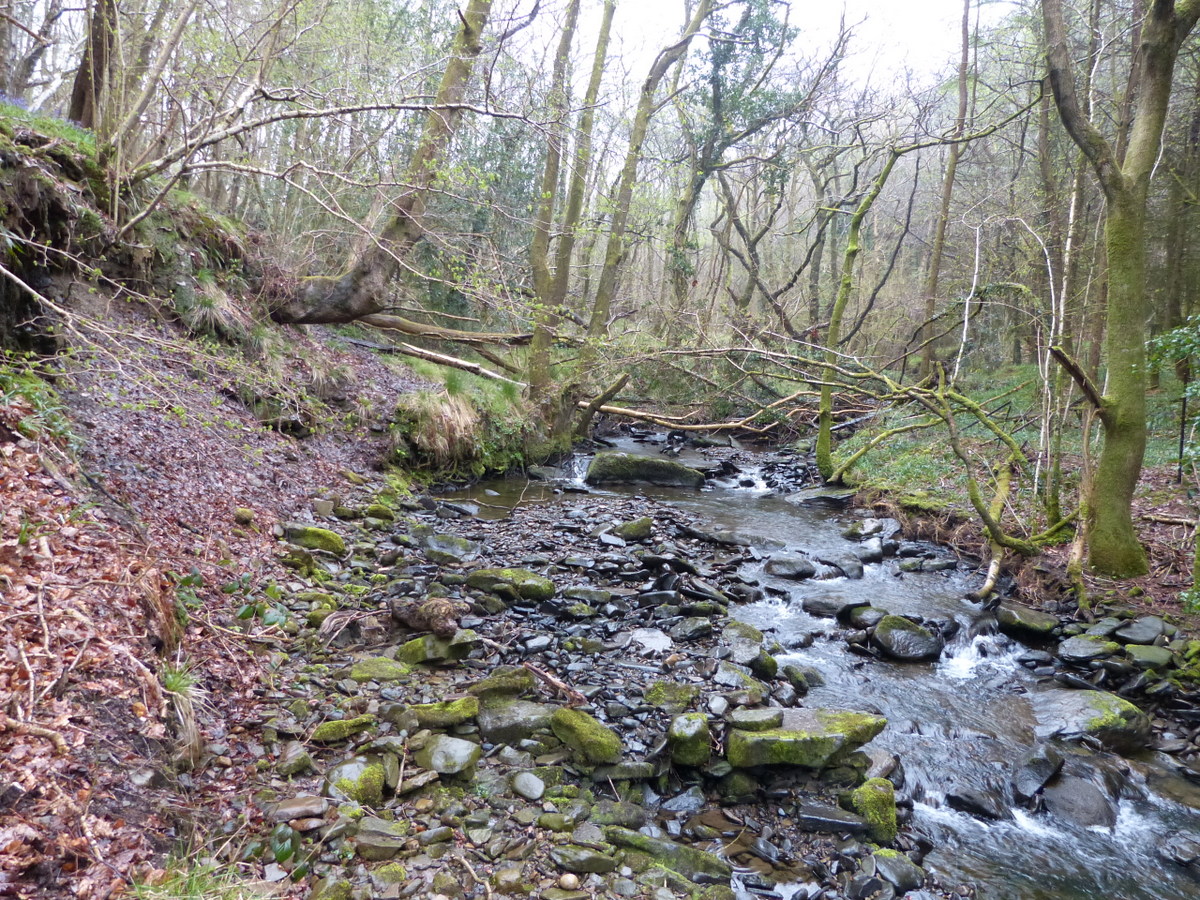
In February I made a start on ST09W by visiting the spoil tips north of Cilfynydd. In a blog post at the time (see here) I mentioned that I was saving the Nant Cae-dudwg (in the same tetrad) for when I had a little more time, and being lucky enough to have a few spare hours this morning I thought it was about time I paid this area a visit.


I walked the length of the footpath within ST0992, which runs along the north bank of the stream through both wooded and open areas. After feeling a bit rusty for the first hour (I hadn't done any square bashing for 6 weeks) things picked up and by the time I'd reached the NE corner of the monad a good list of taxa had been accumulated, albeit with nothing of special interest. The highlights up to this point were a few plants of Colura calyptrifolia on willow (the spindly diagonal trunk in front of the holly in the photo below) and quite a lot of Physcomitrium pyriforme (photo) on a ditch bank alongside the access track.


I was about to head back but a stony flush in the woodland across the stream caught my eye so I waded across for a look. There was no obvious excitement here, but nearby a rotten ash log was covered in Nowellia curvifolia and Riccardia palmata (photo).


A few metres further on another rotten log had more Riccardia and quite a lot of Trichocolea tomentella, which extended beyond the log over quite a large area, looking rather fetching among the marsh marigolds.


75 species were recorded in the field and I still have plenty of samples to go through, so along with the almost entirely different flora of the coal tips this tetrad will now be up to a pretty respectable total.

Friday, 29 April 2016

Cwmnantlleucu Quarry

On my way up to SN70P yesterday evening I passed the quarry, which was quiet, so I parked in the entrance area and had a quick look at the easily accessible rock exposure. Despite everything being bone dry and caked in dust, making id challenging, species such as Amphidium mougeotii (green cushions on images below) and Racomitrium aciculare with Diplophyllum albicans (the extensive dark grey crud on the images below) could almost be described as growing luxuriantly. I still have a box of dirt-covered samples to go through over the weekend, but there appeared to be nothing particularly unusual or unexpected. One observation of interest on the dirt below the rock face was fruiting Pohlia wahlenbergii var. wahlenbergii, which is said to be rare (photo below).

The large oak on the right side of the top photo had an interesting looking pleurocarp growing on an accumulation of powdery dirt in the fork of the trunk. I was convinced this was going to be something I'd not seen before, but in the end all I could make it was odd-looking Brachythecium rutabulum [in fact Sciuro-hypnum plumosum - see comments]. Is there something I may have overlooked?

Sunday, 27 March 2016

Nicholaston

Bryological distractions during our Adder search at Nicholaston on Good Friday included Bryum algovicum (new for SS58), Ptychomitrim polyphyllum (first Gower Peninsula record), Racomitrum aciculare (seemingly uncommon in the lowlands) and Orthodontium lineare (a species I seem to be seeing a little more frequently this year).
rocks along lane at Nicholaston Grange with P. polyphyllum plants arrowed
Ptychomitrium polyphyllum 
Bryum algovicum in dunes below Crawley Bluff
B. algovicum exostome teeth with oblique articulations
Orthodontium lineare

Thursday, 7 January 2016

False Fern-moss at the National Botanic Garden of Wales

Cyathophorum bulbosum
there are nine six-year old dead Dicksonia stumps in the Wallace Garden
Ptychomnium aciculare
Yesterday I was passing the Wallace Garden Tree Ferns at NBGW and couldn't resist checking on the two antipodean mosses that I managed identify last year (Dicranoloma mensiesii and Ptychomnium aciculare). There was an another unfamiliar and quite conspicuous species visible at the base of one of the trunks, which I'd not seen previously and this morning I've managed to locate images and a description on the excellent Australian Mosses Online that show it to be the rather distinctive Cyathophorum bulbosum (Hypopterygiaceae). As mentioned in a previous post these dead Dickinsonia stumps are reported to have been imported from New Zealand about six years ago. There is just the one species of Cyathophorum in Australia, and it seems in New Zealand, so the id should be good. These tree ferns keep producing new species and there's a possibility that some of the other samples of odd looking things I collected yesterday might eventually prove to be of NZ origin too.
...a few microscope images of Cyathophorum bulbosum

Thursday, 1 January 2015

New Year bash


After a week away in Cornwall I was ready for a bit of a bryo outing back home, and although I couldn't match Sam's feats I managed a brief bit of square bashing this afternoon in ST0979. This square falls within ST07Z which has only 12 taxa recorded previously (on CCW surveys).

I started with some grotting along a lane beneath the M4, where Lunularia was abundant, then worked north into nicer territory at Capel Llanilltern churchyard.

The highlight was a most unexpected couple of tufts of Racomitrium aciculare on a sloping gravestone, in a very dry looking position. Associates on the grave were Grimmia pulvinata and a single patch of Frullania dilatata.


Other minor highlights among the 45 species recorded were Cirriphyllum piliferum at the edge of the churchyard and Neckera complanata, which was abundant on Ash trunks in the base of the lane-side hedge.