Showing posts with label Andreaea. Show all posts

Tuesday, 13 March 2018

Out and about

I've had a lean winter recording-wise, but at least February proved to be reasonably productive. Most records were made around Cardiff, Bridgend and Merthyr Tydfil, during stop offs on the way home from work trips. Nothing remarkable has been recorded but minor highlights have included:

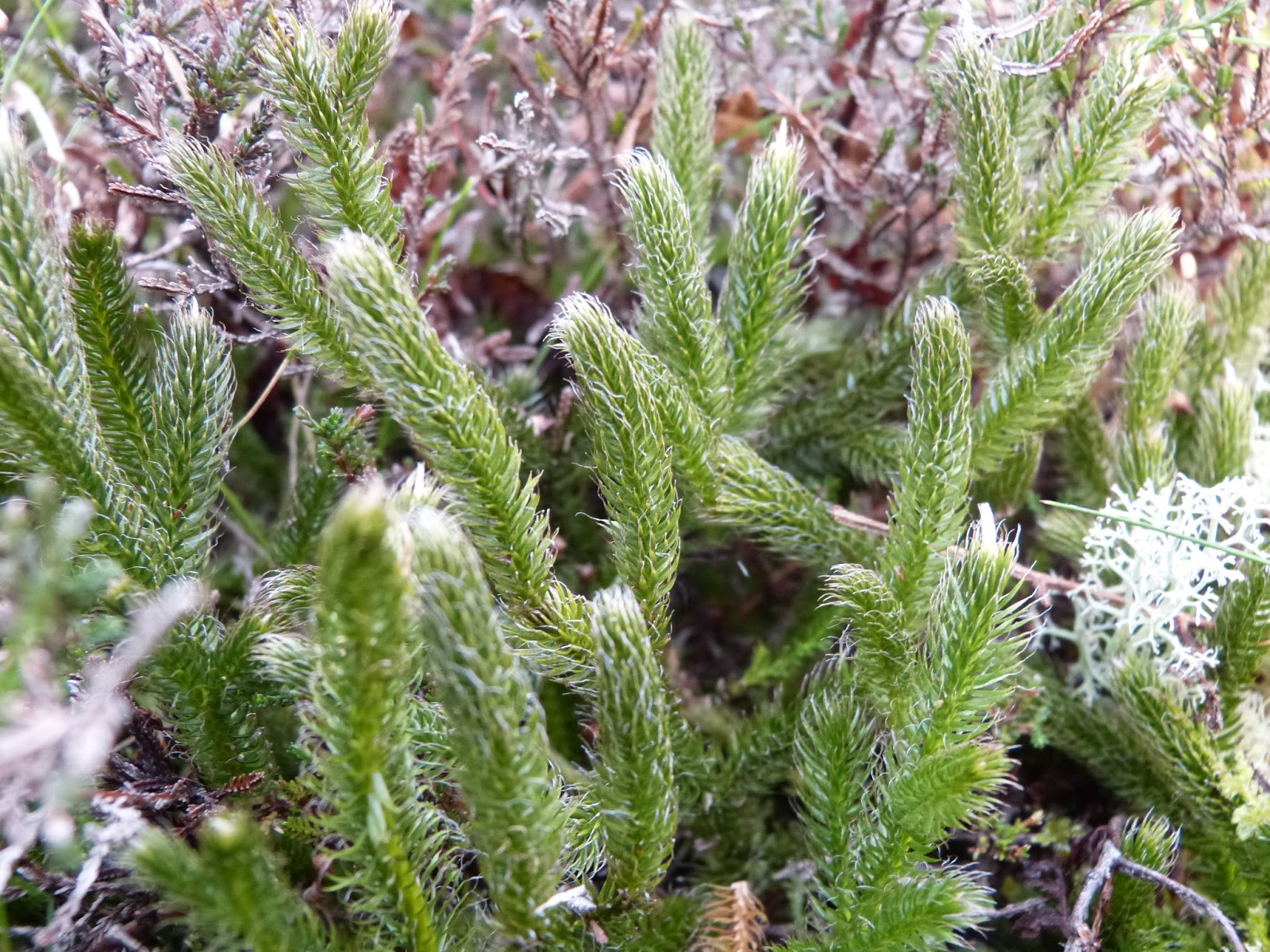
Lophozia bicrenata growing with Lycopodium clavatum among sparse Calluna heath on the former dry ski slope at Troedyrhiw (SO0703). I first saw the clubmoss here back in 2007 and it was pleasing to see it still thrives at the site.
 

Bryum violaceum on gravelly roadside soil, also at Troedyrhiw (SO0603); note smooth violet rhizoids and small tubers.


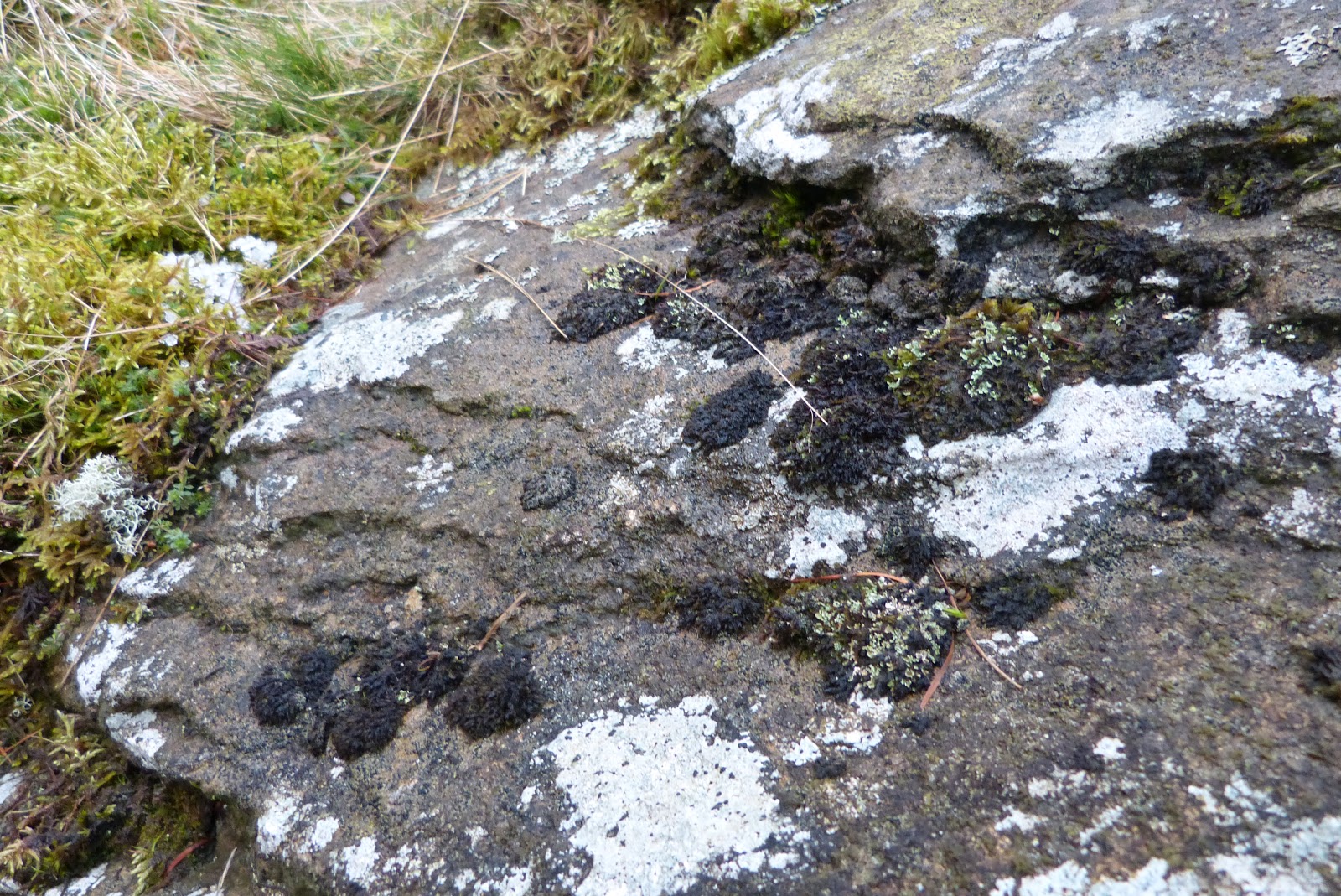
Scapania compacta and Andreaea rothii ssp. falcata on sandstone quarry waste at Merthyr Vale (ST0899).


In Cardiff and Bridgend I've not seen anything noteworthy, though it has been good to confirm Ulota crispa s.s. from several localities (I've been unable to find either U. intermedia or U. crispula to date, despite microscope checking of quite a few samples).

I'll aim to prepare an updated tetrad map in the next couple of weeks, which should show at least a few recording gaps being filled.

Wednesday, 18 January 2017

Tan y Darren

Yesterday I had a thoroughly enjoyable time exploring the north-facing crags and screes at the head of Cwm Dare. It was a bit of a flying visit as I had to get back for the school run, and as usual I spent too much time looking at other habitats on the walk in from the car. I did manage to have a decent look at the screes, but after that I only had an hour left to look at the sandstone crags. This gave me enough time to explore the easternmost crags, but I didn't even make it as far west as the area where filmy ferns have been recorded.
The crags didn't disappoint, despite the lack of any obvious base enrichment. There were a couple of cracking patches of fruiting Diphyscium foliosum in rock crevices (photo below - left), a few capsules of Pohlia elongata protruding from under an overhang (photo below - right), a small patch of Cynodontium bruntonii, quite a lot of Polytrichastrum alpinum (tbc), as well as Bartramia pomiformis and Fir Clubmoss.
The screes held abundant cushions of Andreaea rothii (ssp falcata) (photo below - right) and I found a single cushion of the scarcer A. rupestris (photo below - left, though I'm kicking myself I didn't bring back a shoot to check for the similar-looking rare species). Although the rocks were acidic, the small stream which I followed up the hill from the cwm had signs of base enrichment with plenty of Ctenidium molluscum and a little Palustriella commutata. So far my list for SN9601 is 58 taxa, but I still have samples to sort through...

Fifty five taxa were recorded on the walk in through SN9602, including Climacium dendroides on colliery spoil and Riccardia palmata on a stump in wet alder woodland.

It's definitely an area which needs another visit!

Wednesday, 21 January 2015

Andreaea mutabilis revisited

Thought it might be useful to see pic showing patch of coloured basal cells in A. mutabilis -  - cells are of rather uniform colour in A.rupestris.   Lots of algae on this leaf which probably results from the irrigation the plant was receiving.


Sunday, 11 January 2015

Andreaea rupestris var. rupestris in RCT

Hilary and I spent an hour in the vicinity of the Ton Pentre overlook (SS939945) near Graig Fach, on a cursory trip to RCT yesterday afternoon. Two under-recorded tetrads (SS99H and SS99M) can be accessed within walking distance here and despite the bitterly cold windy conditions we managed to get numbers up to the albeit  modest totals of 39 and 21 respectively.

Graig Fach

A crippling view of a 'ringtail' hen harrier below the overlook was one of the high points of the day. The other was finding Andreaea rupestris on a number of sandstone slabs in the sheep-grazed moorland.

The leaves of Andreaea rupestris are somewhat falcate-secund with a sheathing base.

Unlike A. rothii, the leaves of A.rupestris don't have a costa and unlike A. mutabilis the basal marginal cells are rectangular. 

Basal cells of leaf

The prominent papillae on the abaxial side of the leaf are a feature of A. rupestris.

Confusion with A. mutabilis (absent from South Wales) is possible, but the leaves of that species lack a sheathing base, have a distinct patch of yellow cells near the base and have basal, marginal cells that are more or less circular (isodiametric). Andreaea alpina is usually a much bigger plant, with leaves that are a different shape, with sinuose basal cells, denticulate basal margins and lack prominent papillae on the abaxial side. 
 A. rupestris is much less common than A. rothii  in South Wales. For example, there were only 3 previous records in the Mapamate database for VC41, all from the vicinity of Craig y Llyn and only one of those (courtesy of  SDSB, BS and GMT from their Craig y Llyn trip last autumn) is recent. However there's a lot more habitat like this to explore in upland Glamorgan, particularly in RCT and Bridgend, so I think we'll be able to put a few more dots on the map in the near future. Among the other mostly unremarkable species we recorded were Racomitrium fasciculare (which is abundant here) and Ptychomitrium polyphyllum - typical species of exposed, acid rock on our moorlands. 

Saturday, 3 January 2015

An itch that needed to be scratched

I've been wanting to have a proper look at Tarren y Gigfran (ST09U), an area of sandstone crags and block screes to the south of Aberfan, for some time - and I finally got the chance yesterday. There were only two previous bryo records from the site: Andreaea rothii ssp. falcata recorded by Wade in 1958, and Racomitrium lanuginosum recorded by me on a casual visit in 2012.

On the way to the crags was a small wooded cwm filled with huge sandstone blocks.


These supported a good range of acidophiles including abundant Scapanea nemorea on some of the blocks.
Sandstone blocks with abundant Scapanea nemorea
To reach the east-facing northern crag I had to cross a large area of block screes, which supported abundant Racomitrium heterostichum, occasional A. rothii ssp. falcata, small patches of Ptilidium ciliare and Scapania gracilis, and a couple of patches of what I think is Polytrichastrum alpinum (see photo below - stems were branched and look good for it, but I suppose I should attempt a leaf section to confirm).
Sandstone blocks and crags beyond
Andreaea rothii ssp. falcata
Ptilidium ciliare
Polytrichastrum alpinum (tbc)
The northern crags showed absolutely no evidence of base enrichment, but a nice range of calcifuge mosses were present including frequent Cynodontium bruntonii and a couple of cushions of Bartramia pomiformis.
Cynodontium bruntonii
Bartramia pomiformis
The itch isn't quite scratched as I didn't have time to look at the southern crag, which is north-east facing and longer than the northern crag. Another time...